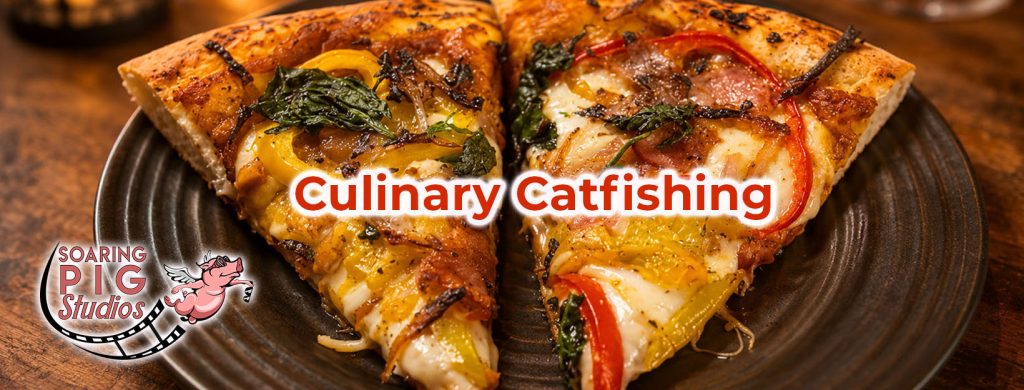
I saw another AI-generated restaurant advertisement the other day, and it’s becoming something of a pet peeve. They’re everywhere now. Perfect steaks, impossibly beautiful burgers, and plates of food that look like they came out of a Michelin-starred kitchen rather than the local restaurant advertising them.
I’m calling it culinary catfishing.
I have no problem with restaurants using artificial intelligence to create advertisements. I use AI myself, and I understand why a restaurant owner would want to save a few dollars on photography and graphic design. But when you use AI to invent a picture of the meal you’re supposedly selling, we’ve got a problem.
I want to see your food. The actual food somebody in your kitchen prepared, not what a computer thinks a 12-ounce prime rib dinner should look like. If I order something based on your advertisement, I’d like a reasonable chance of recognizing it when it arrives at the table.
The frustrating thing is that restaurants don’t need to do this. They can use AI to create attractive, professional-looking advertising without inventing the product. And to demonstrate that, I decided to open a pizzeria.
Well, sort of.
Welcome to Dafoe’s Pizzeria
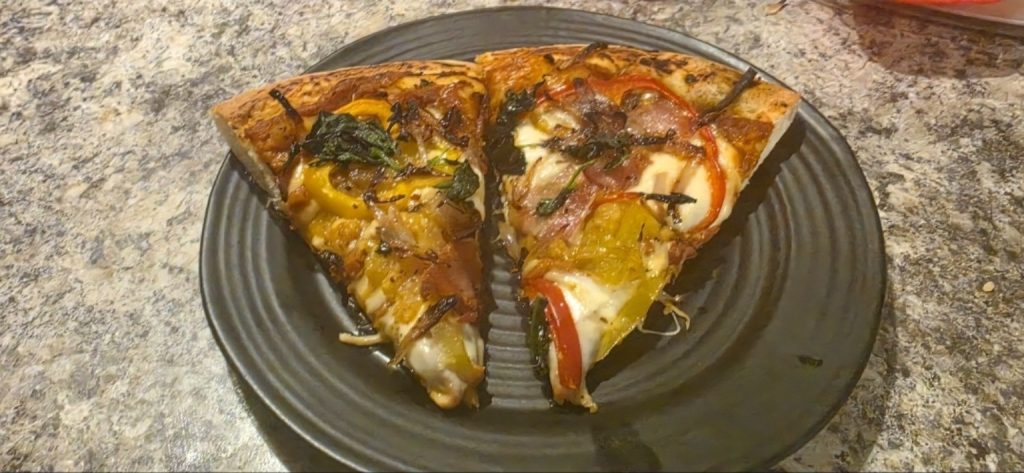
I made a pizza the other night and took a photograph of two slices on a plate on my kitchen counter. Nothing special about the photograph. It was taken with my phone under ordinary kitchen lighting, and the countertop wasn’t doing much to enhance the dining experience.
I then found a professionally photographed pizza in a restaurant setting. It had warm lighting, a rustic wooden table, a shallow depth of field and the sort of atmosphere that makes you want to order something.
I uploaded that image to ChatGPT and asked it to break down the photographic characteristics into JSON. For those unfamiliar with the term, JSON is simply a structured way of organizing information. In this case, it described the lighting, camera angle, composition, colours, background and other visual characteristics of the photograph.
Next, I uploaded my original pizza photograph and instructed ChatGPT to apply that photographic treatment to my image. The result was a much better-looking presentation of the two slices I’d made.
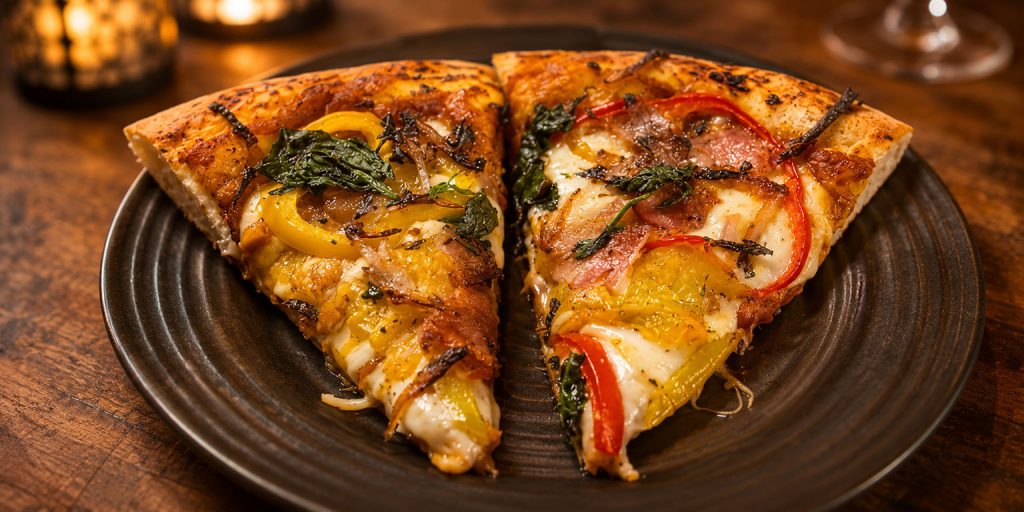
There is an important distinction here. The improved photograph was AI-generated using my food as its reference. It wasn’t simply a Lightroom adjustment, and some of the details of the pizza were reinterpreted. If the objective were to show the exact meal without any alteration, I’d stick to conventional photo editing. But I was interested in demonstrating how the process worked, and I wanted to use something I’d actually cooked rather than inventing an entirely fictional meal.
With the food photograph completed, it was time to create an advertisement.
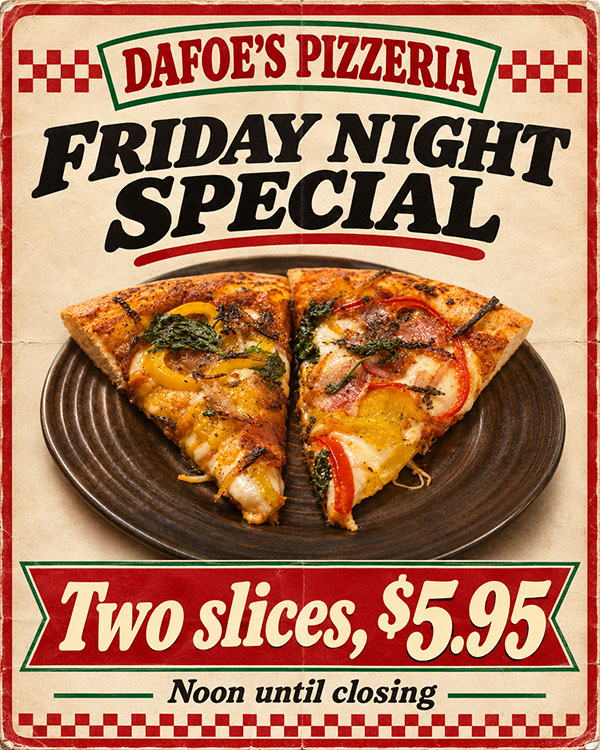 I decided Dafoe’s Pizzeria would offer a Friday Night Special. Two slices for $5.95, available from noon until closing. I wanted the advertisement to look like something produced in the 1990s, when newspaper advertising was full of bold typography, oversized prices, colourful banners and drop shadows.
I gave ChatGPT the copy, specified a 1080 × 1350 format suitable for Facebook and Instagram and asked it to produce the advertisement. The first version wasn’t bad, but it looked more like a modern interpretation of a vintage poster than something a graphic designer would have produced in the period.
So I told it to make the advertisement look more like something assembled in Photoshop or InDesign, two pieces of software I use on a regular basis.
That produced the version you see below. Big red lettering for Dafoe’s, a prominent Friday Night Special headline, the pizza photograph, and a price that nobody is going to have trouble finding.
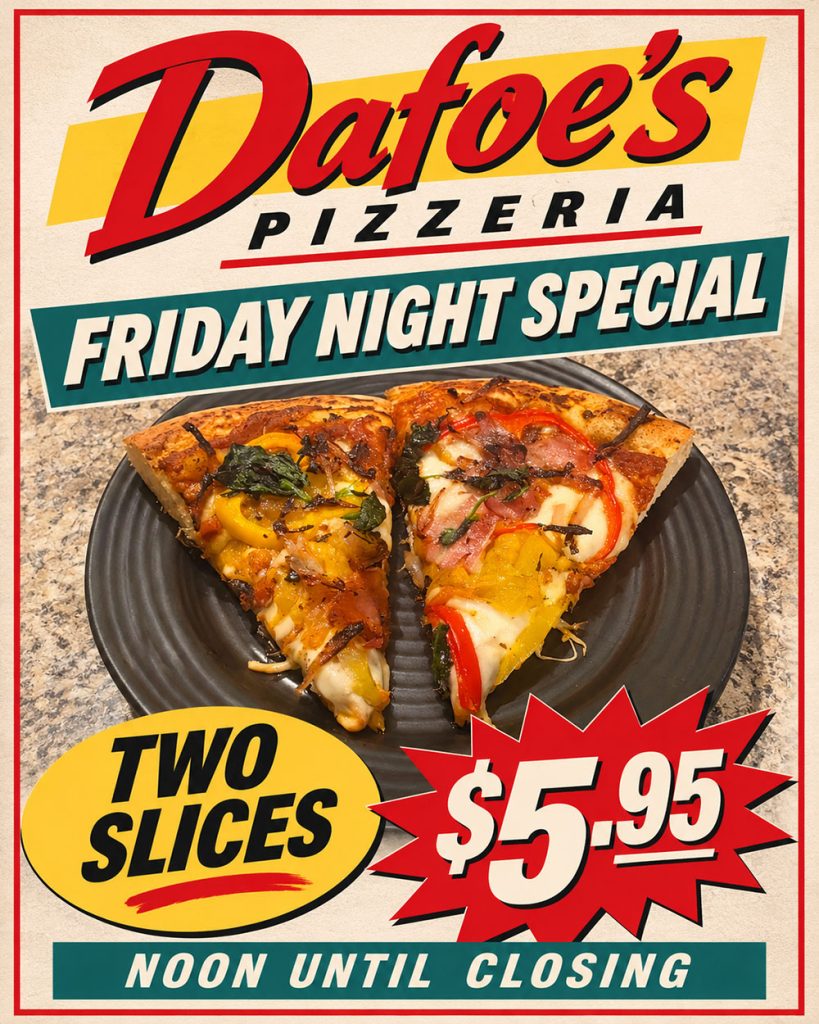
The entire exercise involved my original food photograph, a photographic reference, some instructions and a few revisions. I didn’t open Photoshop or InDesign, although I’ve spent enough years using both to recognize what I wanted from the finished design.
The Difference Between Using AI and Letting AI Do Your Thinking
I’ve worked in newspapers, publishing, photography, marketing and graphic design for a good part of my life. I’ve also seen plenty of dreadful advertising produced long before artificial intelligence became available to the public. Bad design certainly isn’t something AI invented.
What AI has done is make it considerably easier to produce polished-looking material without knowing much about photography, typography or advertising. That’s useful, but it also means people can generate something that looks professional without necessarily understanding whether it communicates anything effectively.
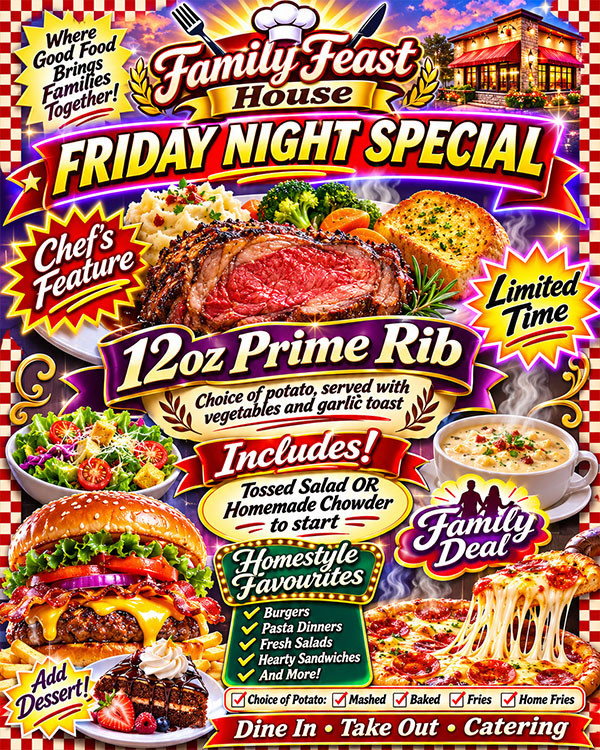 The restaurant advertisement that started this little exercise is a good example. It promotes a Friday Night Special featuring prime rib, a choice of potato, vegetables, garlic toast, and either a salad or clam chowder. There are several photographs, decorative graphics, competing typefaces and plenty of information about what comes with the meal.
But unless I’ve missed it, there’s no price.
Somebody managed to advertise a dinner special without telling potential customers what the dinner costs. That’s a far more significant advertising problem than whether the images were made with AI.
And that’s really my point. Artificial intelligence is a tool. It can help you produce advertising, improve your presentation and save a considerable amount of time and money. But somebody still has to apply their judgement to decide what the advertisement needs to accomplish, what belongs in it and what should be left out.
For restaurants, I’d argue that starts with showing people the food you actually make. Take a decent photograph. Use AI to explore a layout, build promotional graphics or help put the whole thing together. If you use generative editing on the food itself, recognize that you’re no longer showing an exact photograph of the meal.
A beautiful photograph of a prime rib dinner doesn’t mean much if the kitchen can’t produce what’s pictured. And an advertisement with twelve different design elements doesn’t become more effective simply because it has twelve different design elements.
You don’t need to tell people everything you know. You need to tell them what they need to know.
As for Dafoe’s Pizzeria, our Friday Night Special is two slices for $5.95, noon until closing. Unfortunately, the restaurant doesn’t exist and the chef has already eaten the inventory.
But at least you know what it costs and the food looks like I made it in an oven, not a data centre.
– Stephen Dafoe, The Soaring Pig Himself